
Zisha
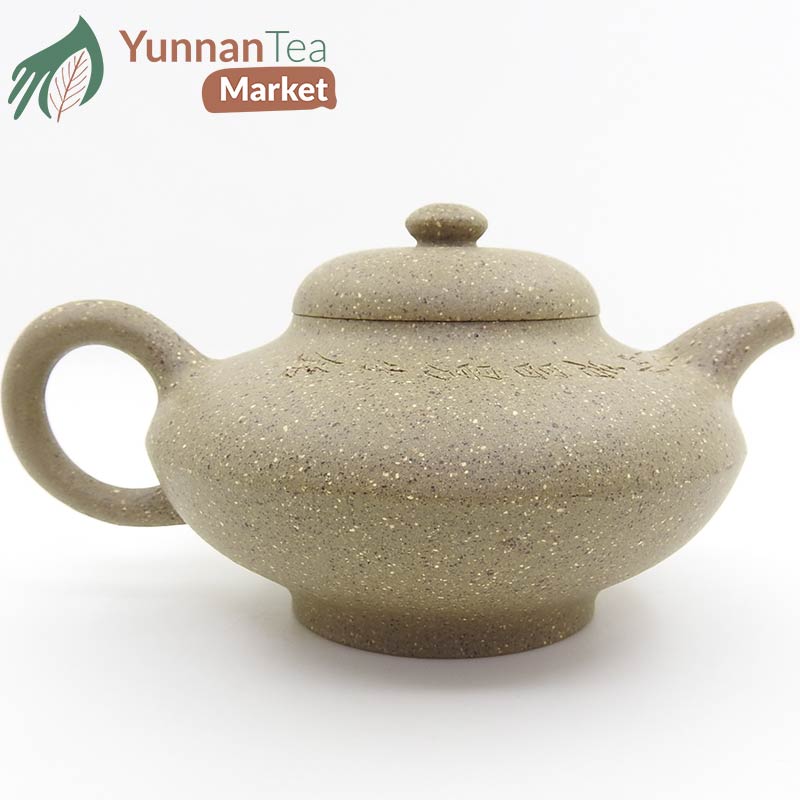
The story of the He Huan teapot
28
Dec
Dec
Origin and Story
The creation of this inscription (on this teapot) is related to an experience of Chen Man Sheng 陈曼生.
Legend has it that when Chen Man Sheng served as an official in Liyang, Jiangsu. He completed a task of delivering tea as tribute to the imperial court. And thus held a celebratory banquet in its honour.
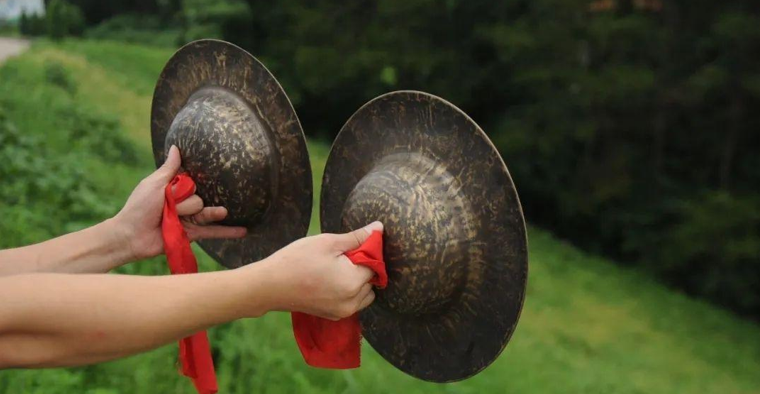
During the joyous celebration, inspired by the “Hecha 合镲” (a bronze percussion instrument consisting of two pieces that make a sound when joined), he designed the “Hehuan” (Joyful Union) teapot, made from two joined halves of clay.
In his joy, Chen Mansheng inscribed this text (八饼头纲,为鸾为凰,得雌者昌). Condensing his appreciation for the famous tea (八饼头纲), his yearning for auspiciousness (鸾凰), and his pursuit of harmony (得雌者昌). And the ingenious combination of the teapot’s shape (Hehuan合欢) into twelve characters.
It has become a classic inscription on Zisha teapots that has been passed down to this day.
“Eight cakes of the first batch, like phoenixes and luan birds, those who obtain the female prosper 八饼头纲,为鸾为凰,得雌者昌” is an inscription on a Qing Dynasty Yixing teapot, written by the scholar Chen Hongshou 陈鸿寿 ( also known as Chen Man Sheng 陈曼生) and crafted by the renowned teapot maker Yang Pengnian 杨彭年. This inscription not only aligns with tea culture but also carries a beautiful symbolic meaning.
Detailed Interpretation of the Inscription
Eight Cakes of the First Batch (八饼头纲)
Original Meaning
Refers to the finest Dragon and Phoenix Tea cakes presented as tribute from the Jianxi region of Fujian during the Song Dynasty. This tea was pressed into cakes, with eight cakes weighing one jin (approximately 500 grams) each (i.e., “eight cakes八饼”). The first batch was made and presented as tribute in early spring each year, hence the name “first batch头纲,” making it extremely precious.
Intended Use in the Inscription
Uses the precious tribute tea as a metaphor for the exquisite quality of tea brewed in this teapot.
Like phoenixes and luan birds (为鸾为䍿huáng)
Original Meaning
Describes the decorative patterns on the tribute tea cakes. “Luan and huáng 鸾 䍿” (an ancient form of 凰 female phoenix) are both auspicious mythical birds similar to the phoenix, symbolising good fortune and peace.
Intended Use in the Inscription
The beautiful, auspicious bird serves to highlight the elegance of tea and tea ceremonies, naturally leading to the emphasis on the “female雌” (phoenix凰) in the following text.
Those Who Obtain the Female Prosper (得雌者昌)
Meaning
This is the highlight of the inscription. “Female雌” refers to the female phoenix雌凰. The ancients believed that the appearance of phoenixes (or luan-huang鸾凰) in pairs, representing harmony between yin and yang, was an auspicious omen, bringing family harmony and prosperity.