








Description
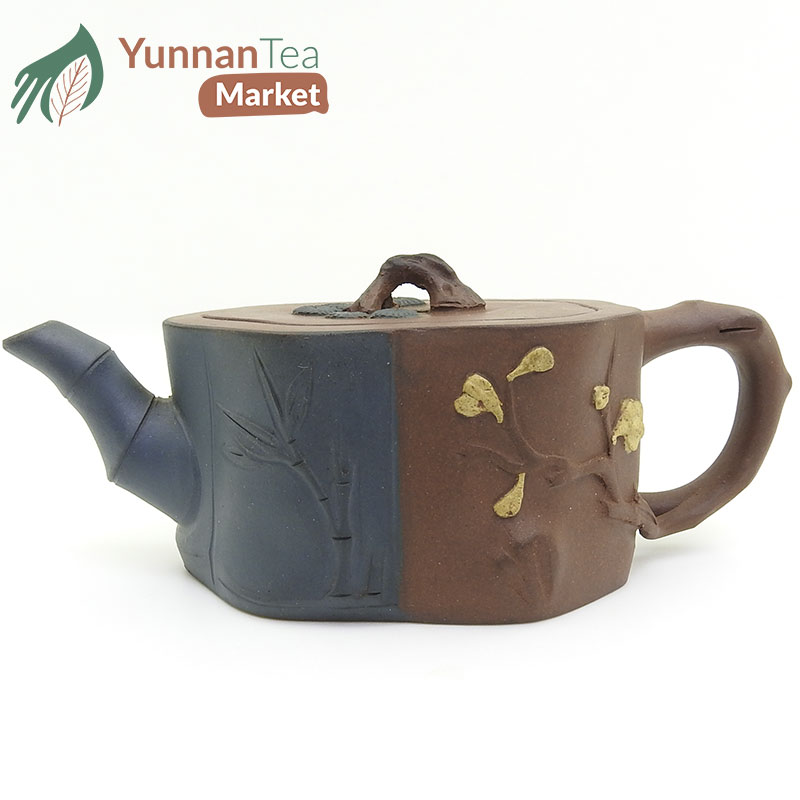
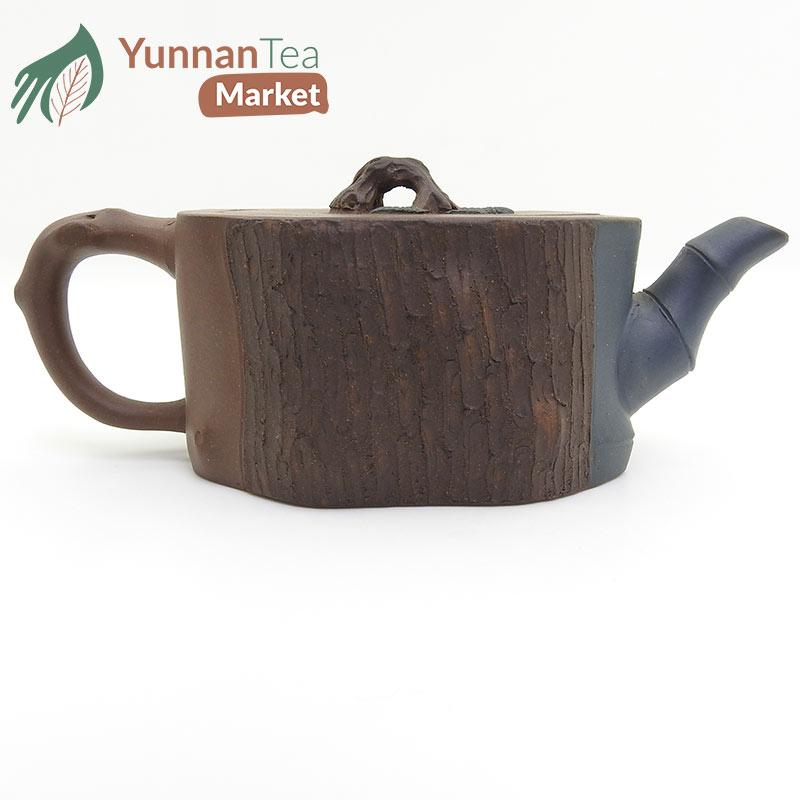
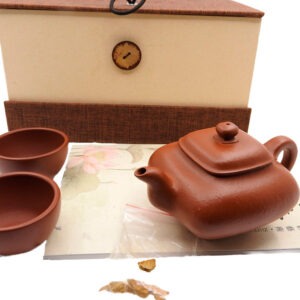
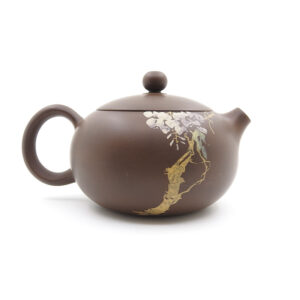
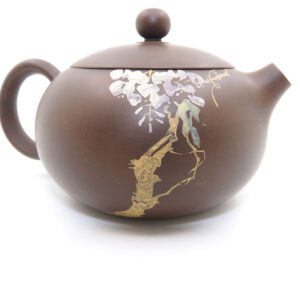
Name: F1 Suihan Sanyou Teapot (Three Friends of Winter or Three Plant Friends)
Year: late 70s (Green Label)
Volume: 145 ml +/- ( To the brim. With tea, after the tea leaves expand, depending on the grams of tea used, 125 ml +/- or less.)
Material: Qing Shui Ni. High-fired.
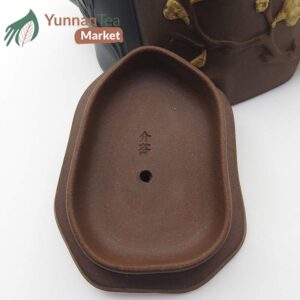
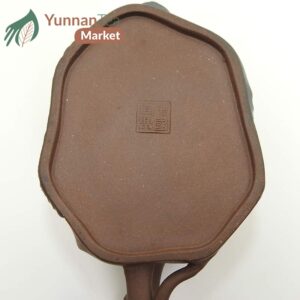
Seal: Zhong Guo Yi Xing
Handle: N/A
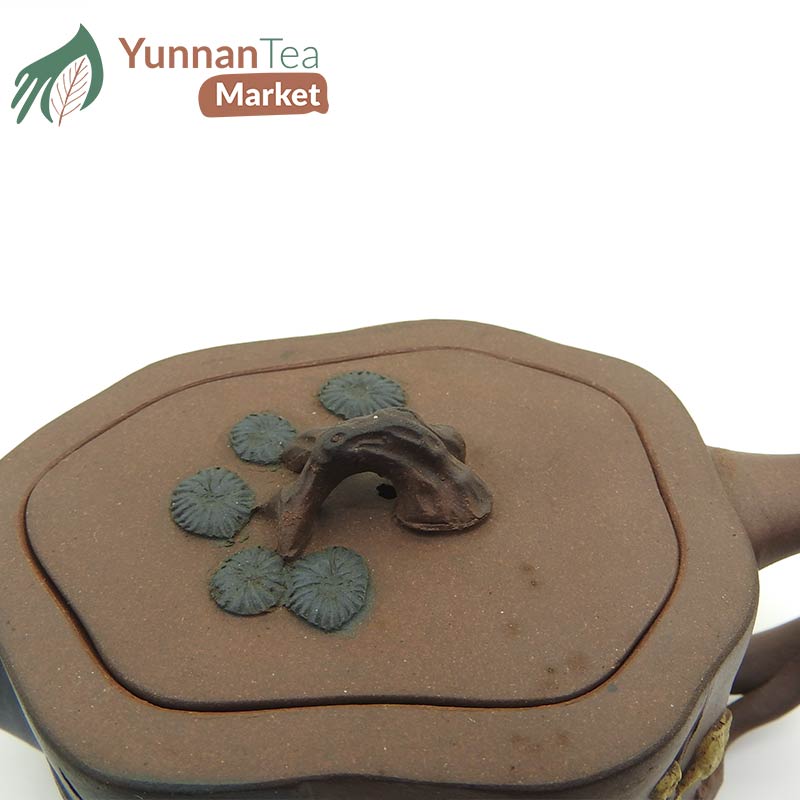
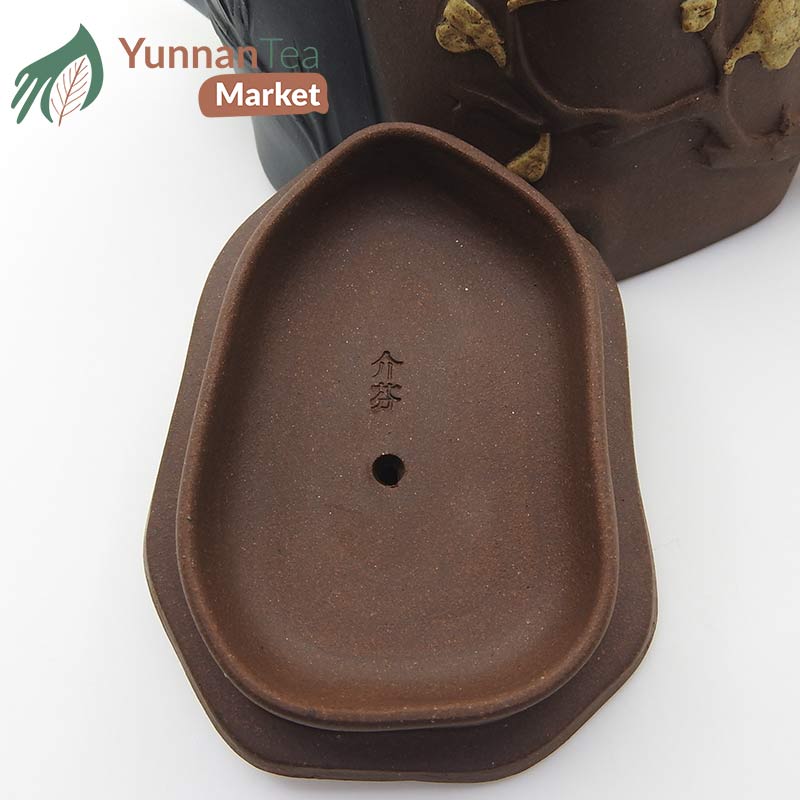
Lid: Jie Fen
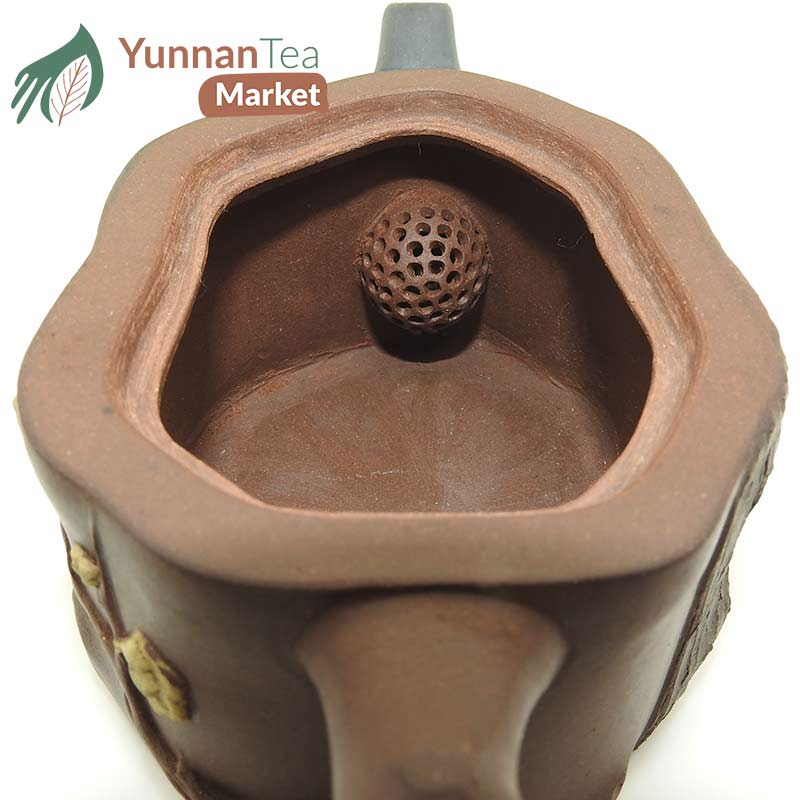
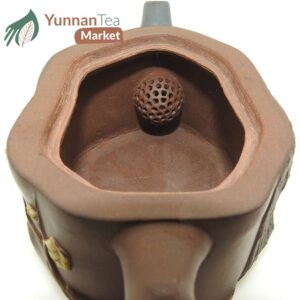
Filter: Ball filter
Pouring time: 7s +/-
(F1 Suihan Sanyou Teapot)
The story of the Three Friends of Winter (Suihan Sanyou) comes from a Poem.
Origin of the name: The earliest mention of the “Three Friends of Winter” appears in Lin Jingxi’s Jishan Collection (霁山集) from the Song Dynasty, specifically in the section “Record of the Five Clouds Plum Abode” (五云梅舍记). The text mentions “tall pines and tall bamboos as friends in the cold of winter.” Its origin is related to Su Shi, who, after being demoted to Huangzhou, planted pine, cypress, plum, and bamboo in his courtyard, saying, “Wind and spring provide two kinds of music, pine and bamboo are three beneficial friends.” Later generations used this to collectively refer to pine, bamboo, and plum as the “Three Friends of Winter.”
Cultural symbolism: Pine is evergreen, symbolising longevity, health, and unwavering integrity. Bamboo is evergreen, hollow, and segmented, symbolising the way of the gentleman, representing uprightness, humility, and principled character.
Plum blossoms, which bloom between winter and spring, are highly cold-resistant, symbolising purity, lofty ideals, and a character that is unafraid of harsh weather and does not conform to worldly corruption.
The concept of the “Three Friends of Winter” (pine, bamboo, and plum) first appeared in writing during the Song Dynasty. Its imagery can be traced back to the aesthetics of literati during the Wei, Jin, Tang, and Song dynasties. And is fundamentally related to the literati’s aspirations for integrity and their appreciation of nature.
About the design of the teapot
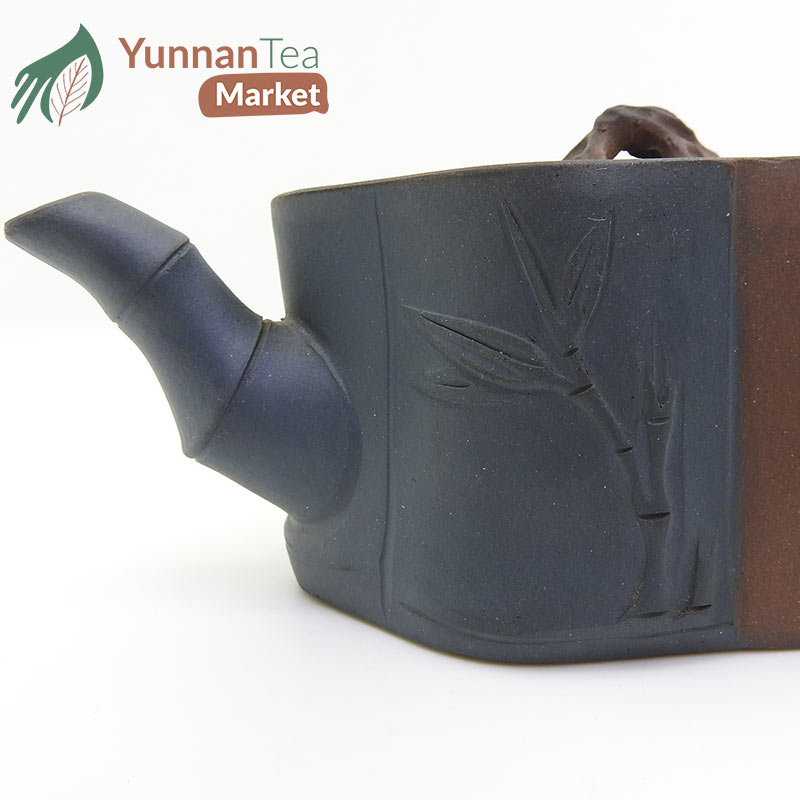
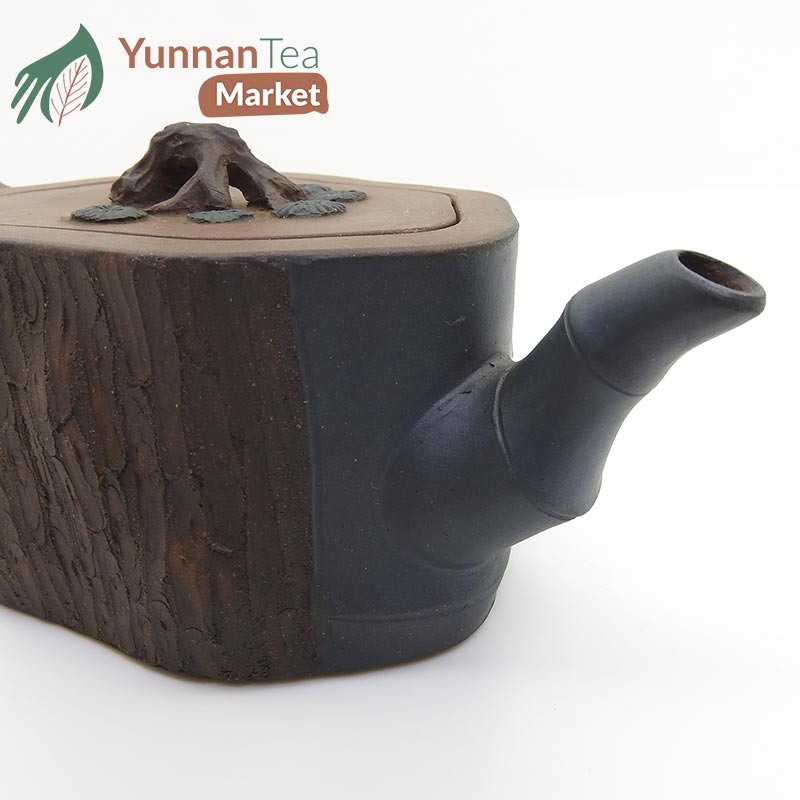
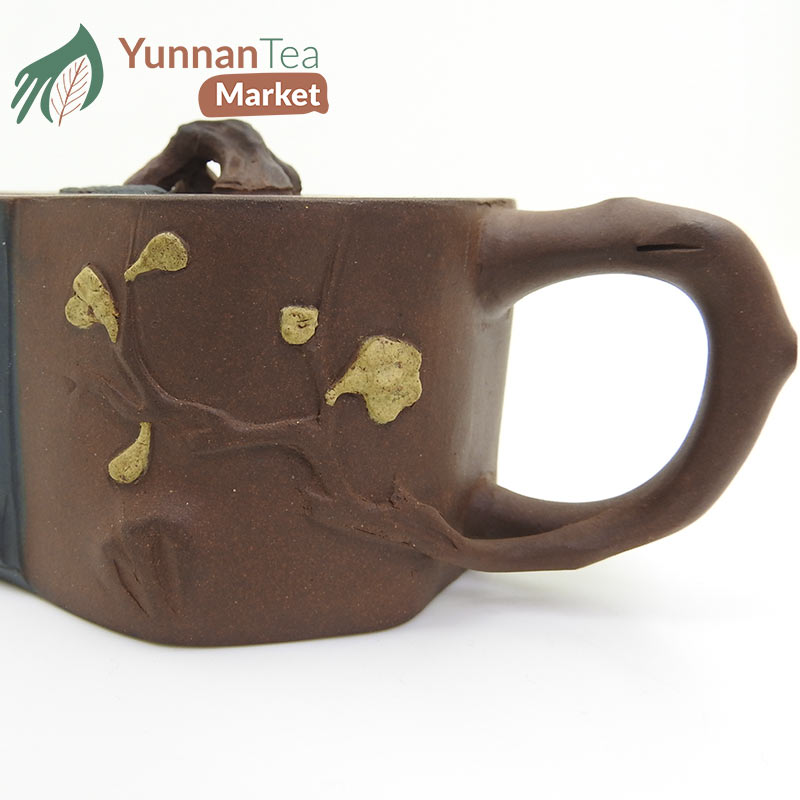
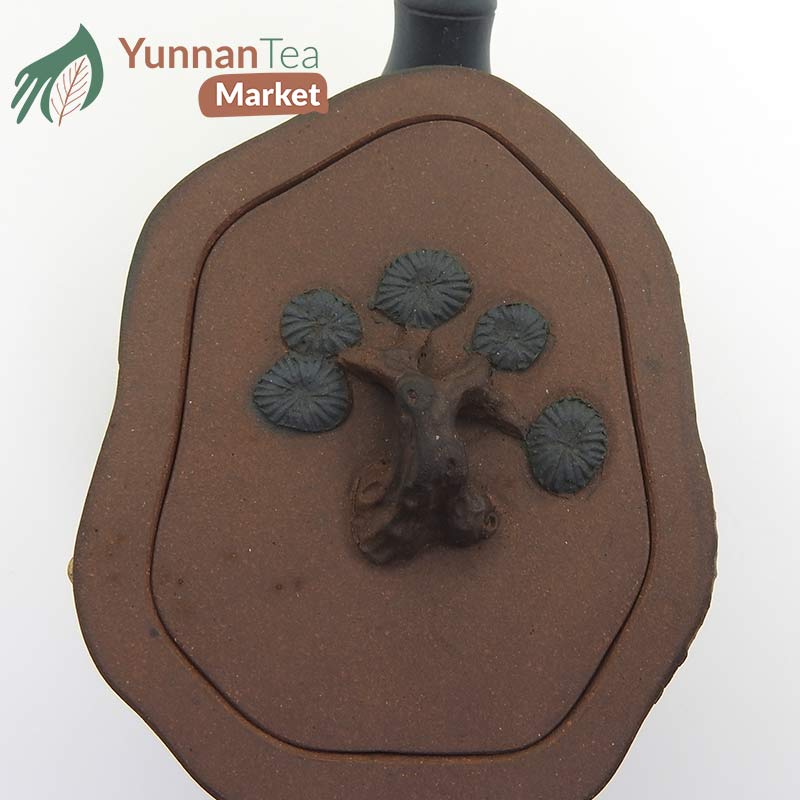
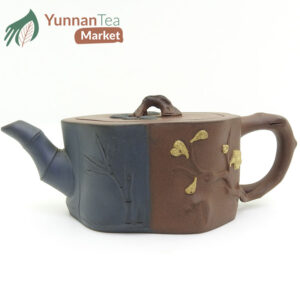
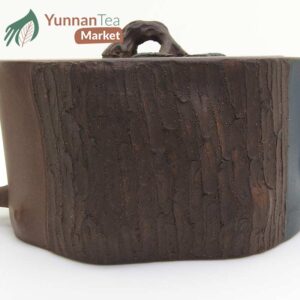
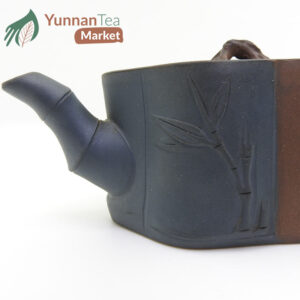
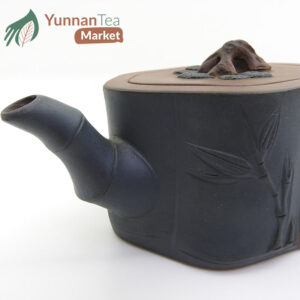
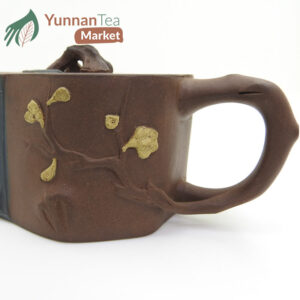
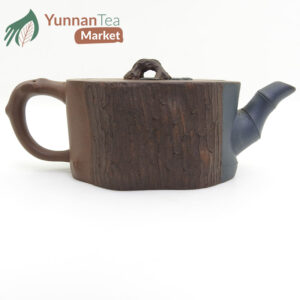
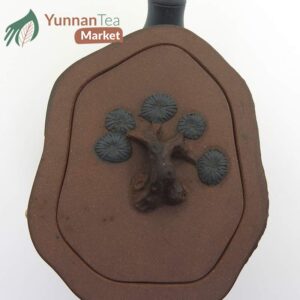
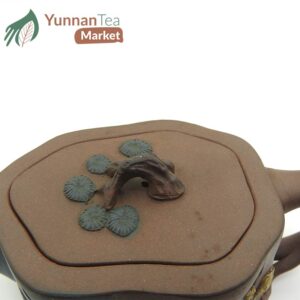
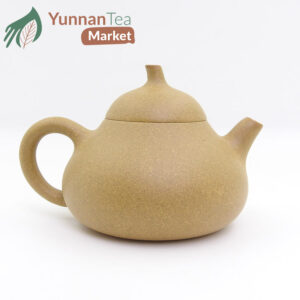
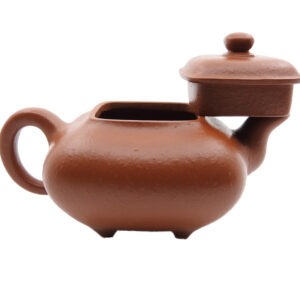
Its design draws inspiration from the abovementioned poem. It combines the “Three Friends of Winter”, pine bark, bamboo and plum blossoms. The Factory One made the bark with Zini.
They only coated the Bamboo part on the outside with Lüni (the inside of the teapot is pure Qing Shui Ni).
The handle is a plum tree stump, and they made it of Qing Shui Ni, and the knob in the lid is pine branches and leaves.
While usually many Factory One pots’ craftsmanship is lacking in comparison to modern teapots. It is not always the case, and the Suihan Sanyou is the proof of this. The lid sits tightly, and the pouring speed is fast with no dripping, unless you fill the pot to the brim and tilt it vertically immediately while pouring.
What teas pair with this clay?
This teapot is brand new, so rinse it with boiling water two or three times, or until the water runs clear with no clay residue or dust. Then it’s ready to use.
Opening the teapot (before first usage)
This clay usually pairs well with darker teas, high-roasted Oolongs, wet-stored Sheng Puer or old Puer, Shu Puer, Liubao, and other similar teas. However, it might do well with other teas. You can compare it against porcelain to decide which teas brew well.
When buying a Factory One pot, be aware that:
Generally speaking, these teapots do not possess the same level of craftsmanship as many modern teapots. Please note that Factory One pots are half-handmade.
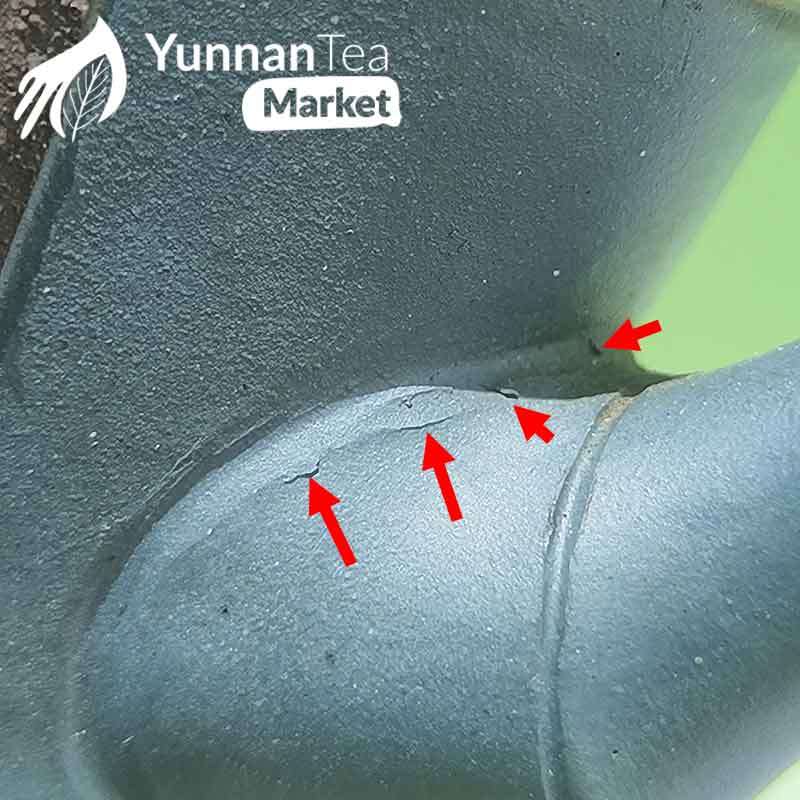
You can expect some natural kiln cracks on the (outer) surface of the clay, not perfectly aligned spout, knob and handle. In addition to some tooling marks on the lid and mouth of the teapot, etc. Also, other natural signs from the kiln, i.e. black spots, are iron oxide that melted during the firing. Additionally, finding mica chips, which look like tiny, shiny metal spots and are silvery in appearance, inside and outside the teapot, is common for these teapots. Another common trait is the presence of larger sand grains protruding on the surface of the clay, which push their way out during firing as the material contracts.
When it comes to lid craftsmanship, it is rare to find a perfect fit. The lid tends to be slightly loose and may drip when pouring.
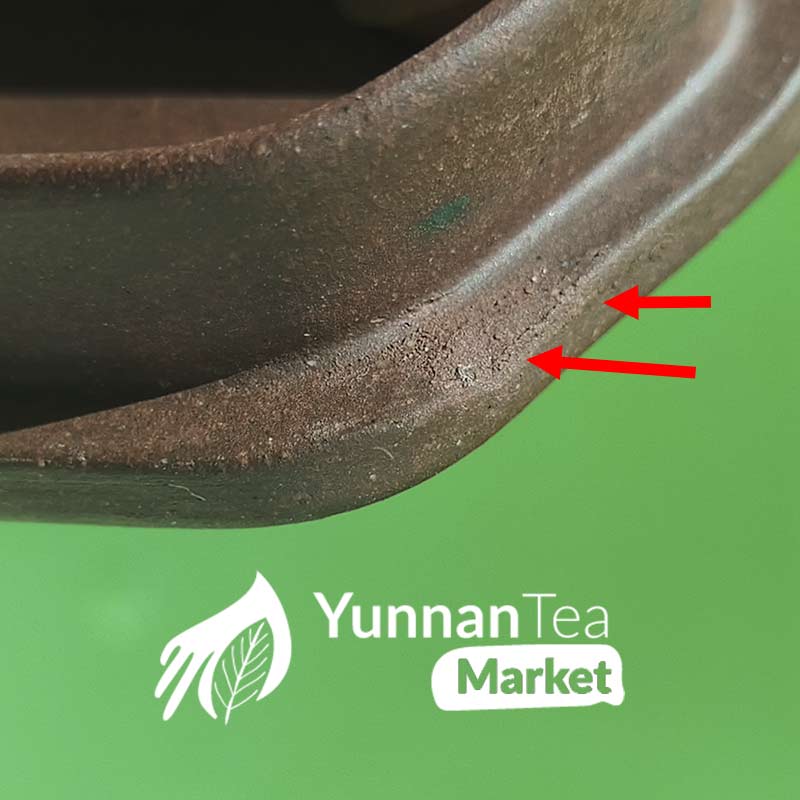
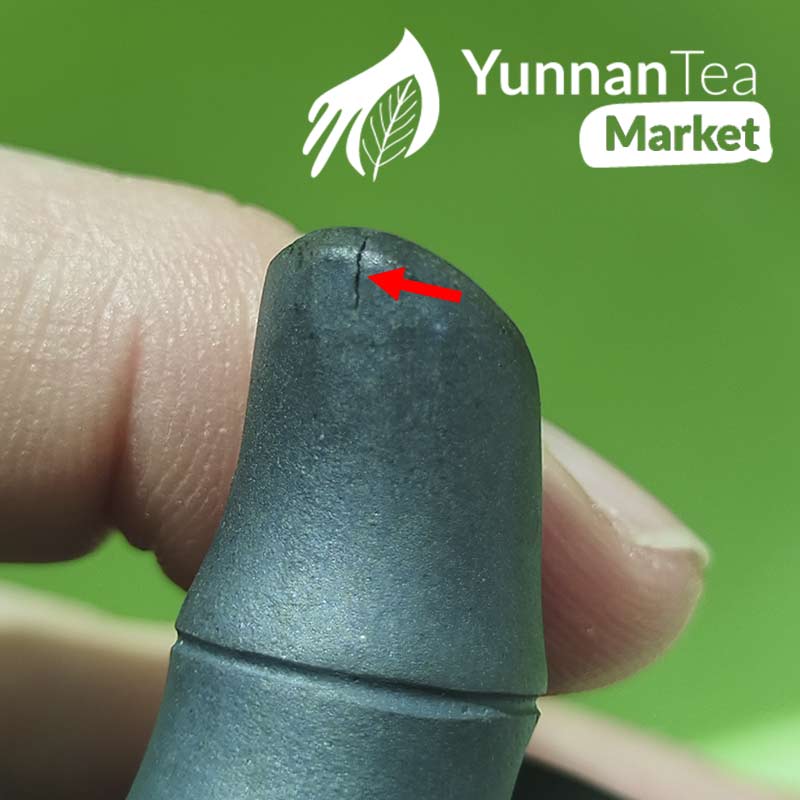
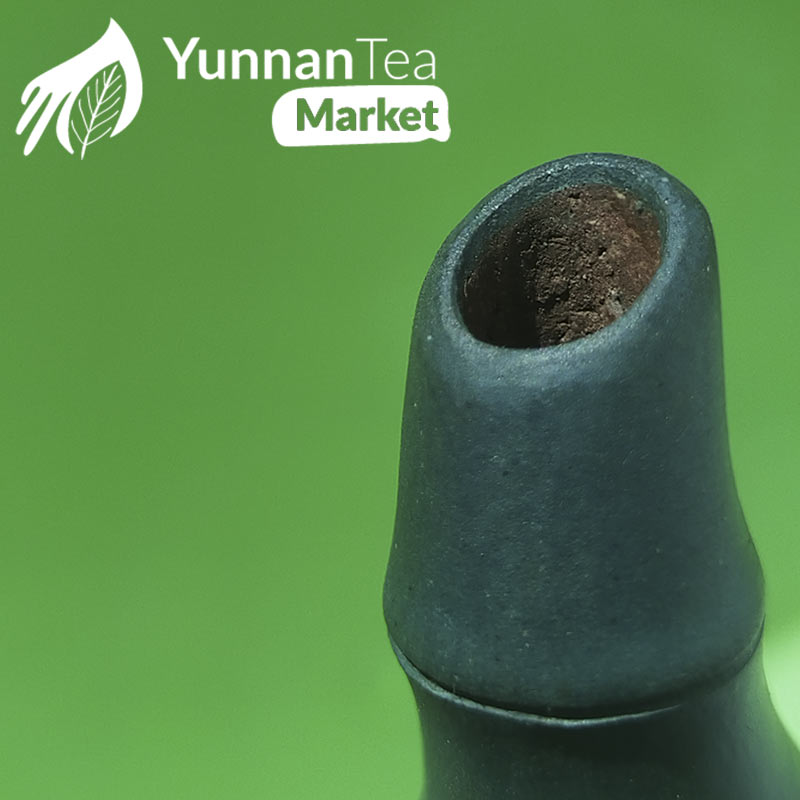
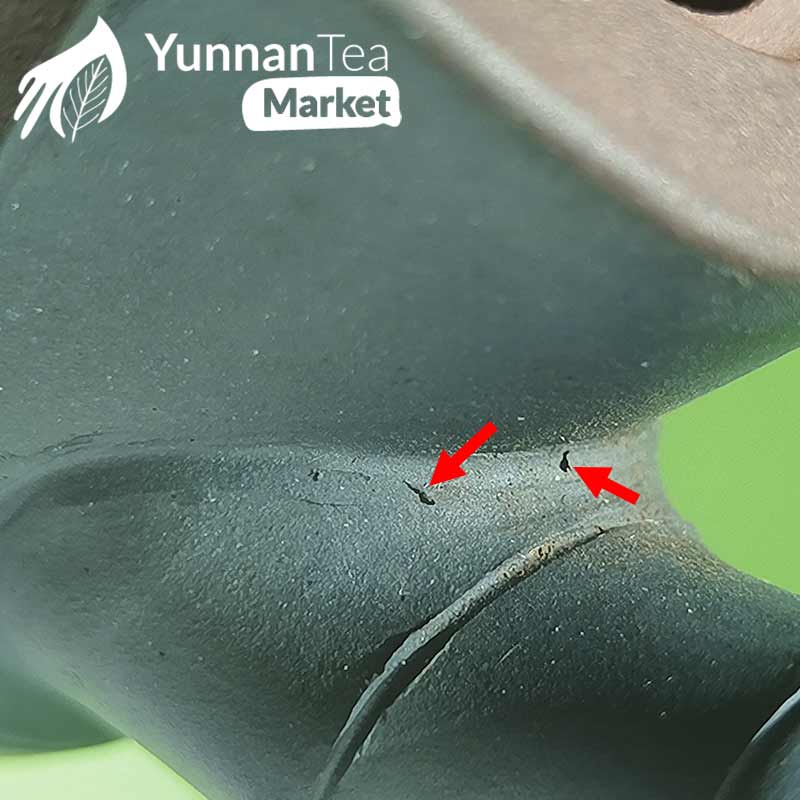
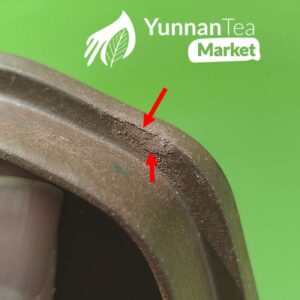
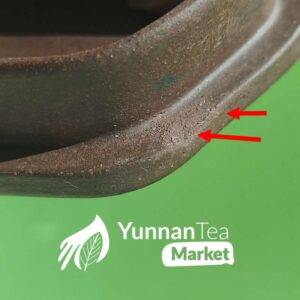
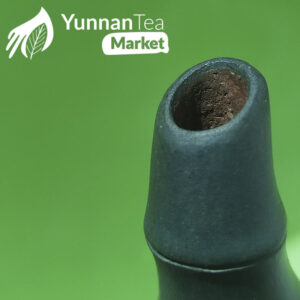
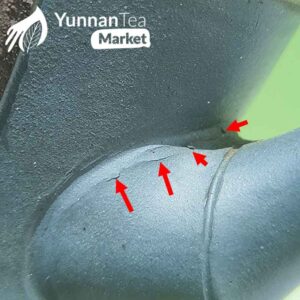
Please note in the last six pictures: The teapot’s price is lower than usual because, under the lid, one edge has a tooling mark; the potter didn’t spread the clay properly. And also, the tip and base of the spout have some superficial kiln cracks. Meaning the crack is only on the Lüni layer. It doesn’t penetrate any deeper. You can see that the Qing Shui Ni on the inside of the spout doesn’t have the crack shown on the outside of the picture. This kind of superficial kiln crack on the coated Lüni layer is quite common on this kind of teapot. I have two other Suihan Sanyou pots with the same marks on the Lüni part.
That said, the teapot has no chips or any other damage.
Please also note that with this type of teapot, which features a Lüni slip, it is very common for Lüni clay to accidentally splash onto the Qingshui ni body and lid during production. As a result, you may notice small blue stains here and there.
Additional information
| Weight | 650 g |
|---|
Reviews (0)
Only logged in customers who have purchased this product may leave a review.
Related products


Reviews
There are no reviews yet.